The Union Budget is not just a government document presented once a year. For most Indians, it has a direct connection with monthly expenses, income tax planning, savings decisions, job prospects, and long-term financial security. As India approaches Union Budget 2026, expectations are naturally rising among the middle class, salaried taxpayers, investors, and businesses.
This article focuses strictly on expectations ahead of Budget 2026. It does not predict announcements or claim insider information. Instead, it explains what different sections of society are logically expecting based on past budget trends, economic realities, fiscal constraints, and the government’s broader policy direction. The goal is clarity and perspective, not speculation.
What Is the Union Budget and Why It Matters
The Union Budget is the government’s annual financial roadmap. It outlines how much revenue the government plans to collect through taxes and borrowings, and how that money will be spent across sectors such as infrastructure, healthcare, education, defence, welfare schemes, and public services.
Even if you do not directly pay income tax, Budget decisions still affect you. Government spending influences inflation, interest rates, employment generation, business growth, and overall economic stability. Over the last decade, Union Budgets have increasingly focused on long-term structural reforms rather than short-term relief, and Budget 2026 is expected to continue this broader approach.
Economic Context Before Budget 2026
Every Union Budget is shaped by the economic environment prevailing at the time. Before discussing expectations from Budget 2026, it is important to understand the broader context in which this Budget will be presented.
1. Inflation and Household Pressure
Inflation, especially in essential categories such as food, healthcare, education, housing, and transportation, has steadily increased the cost of living for Indian households. Even when headline inflation numbers show moderation, the lived experience of families often remains one of rising monthly expenses.
Over the past few years, households have adjusted to higher grocery bills, rising school and college fees, increasing medical costs, and higher rents or home loan EMIs. While inflation control remains a stated policy objective, financial pressure at the household level has not fully eased.
From Budget 2026, expectations are not about immediate price reduction, but about measures that help households manage inflationary pressure indirectly — through tax relief, better public services, or income-support mechanisms.
2. Fiscal Deficit and Government Borrowing
The fiscal deficit represents the gap between government spending and revenue. In recent budgets, the government has clearly communicated its intent to gradually reduce the fiscal deficit instead of taking abrupt corrective steps.
This approach limits the scope for aggressive tax cuts or large-scale giveaways. At the same time, it reflects an effort to maintain macroeconomic stability, control borrowing costs, and protect long-term growth prospects.
As a result, Budget 2026 is expected to balance selective relief with fiscal discipline, rather than pursuing expansionary policies that could strain public finances.
3. Shift Towards Capital Expenditure
One of the most visible trends in recent Union Budgets has been the growing focus on capital expenditure. Government spending has increasingly been directed towards roads, railways, defence, logistics, housing, and core infrastructure projects.
This strategy prioritises long-term economic capacity building over short-term consumption. Infrastructure investment improves productivity, creates employment, and supports sustained growth over several years.
Budget 2026 is widely expected to continue this capital-expenditure-led approach, even if it leaves limited room for short-term populist measures.
4. Global Economic Uncertainty
India’s economic decisions do not exist in isolation. Global interest rate cycles, geopolitical tensions, energy price volatility, and uneven growth in major economies continue to influence domestic policy choices.
In such an environment, governments usually avoid aggressive fiscal experiments. Stability, predictability, and resilience become priorities, and Budget 2026 is expected to reflect this cautious approach.
What the Middle Class Expects From Budget 2026
The Indian middle class is the backbone of consumption, savings, and tax compliance. Expectations from Budget 2026 are therefore practical, realistic, and shaped by everyday financial pressures.
1. Relief From Rising Cost of Living
Middle-class households face rising expenses across almost every category — groceries, education, healthcare, housing, fuel, insurance, and EMIs. While income levels have improved for some, expense growth has often outpaced salary growth.
As a result, expectations revolve around policies that improve disposable income or reduce recurring financial stress, either through tax relief or improved affordability of essential services.
2. Review of Standard Deduction
The standard deduction has become one of the most visible relief measures for salaried individuals. With inflation steadily eroding real purchasing power, many expect the government to review this deduction so that it better reflects current cost realities.
Even a modest adjustment is often viewed as meaningful relief by middle-income earners.
3. Simpler Personal Tax Compliance
Beyond monetary relief, the middle class increasingly values simplicity. Reducing confusion between tax regimes, paperwork, and compliance complexity is often considered as important as tax savings.
What Taxpayers Are Watching Closely
Salaried employees, professionals, freelancers, and small business owners closely follow Budget announcements related to income tax and compliance rules.
1. Income Tax Slab Rationalization
There has been long-standing public discussion around aligning income tax slabs with inflation and income growth. While sweeping changes are unlikely, taxpayers expect incremental rationalization that improves take-home income without significantly impacting government revenue.
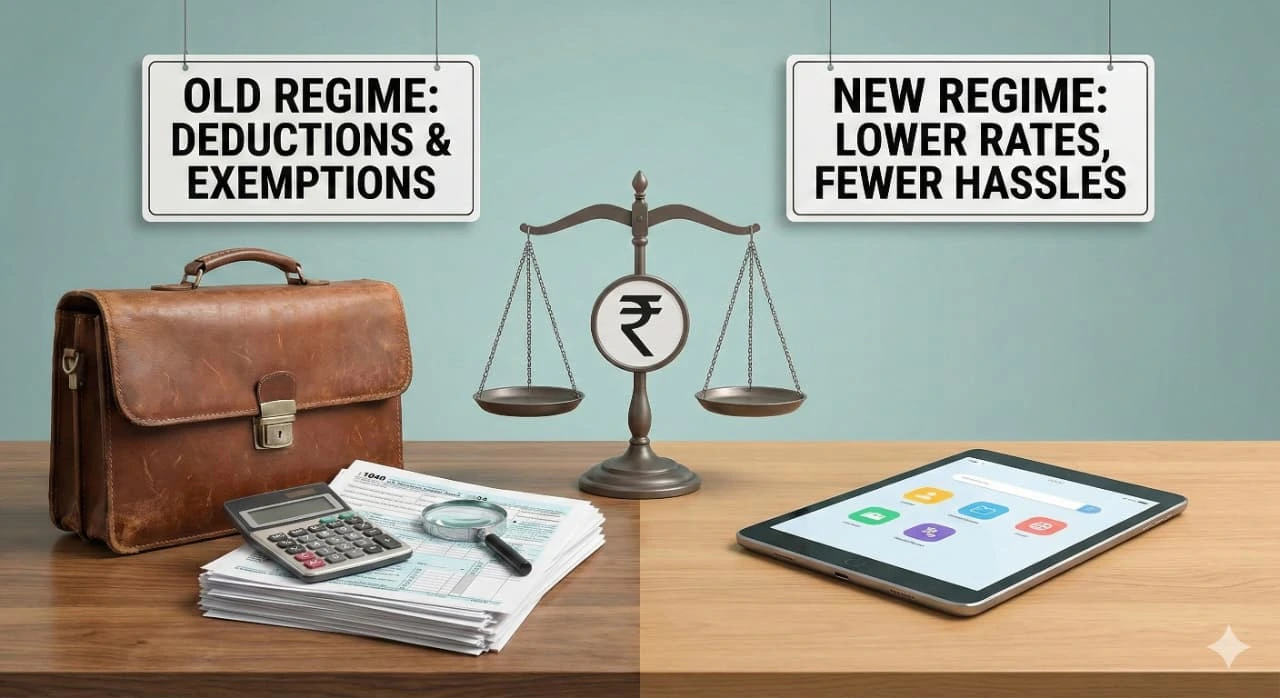
2. Old vs New Tax Regime Direction
The coexistence of two tax regimes has created confusion for many taxpayers. Recent budgets have gradually nudged individuals toward the new regime, and Budget 2026 is expected to continue this transition with clearer positioning and simplification.
3. Stability in Deductions and Exemptions
Taxpayers generally prefer stability over frequent changes. Predictable rules around popular deductions help long-term financial planning and compliance.
What Investors Expect From Budget 2026
For investors, the Union Budget is not about short-term stock market movements but about policy consistency and long-term direction.
1. Stability in Capital Gains Taxation
One of the strongest expectations among investors is stability in capital gains taxation. Predictable tax rules reduce uncertainty and encourage long-term participation in equity and mutual fund markets.
2. Continued Focus on Growth-Oriented Sectors
Based on recent policy direction, investors expect sustained government support for infrastructure, manufacturing, renewable energy, defence, and digital-led sectors.
3. Encouragement for Long-Term Savings
Policies that promote retirement planning, pensions, and long-term savings are generally welcomed by investors focused on wealth creation rather than short-term gains.
How Budget 2026 Expectations Compare With Previous Budgets
To understand expectations from Budget 2026, it is useful to compare them with the direction taken in recent Union Budgets.
Over the last few years, budgets have increasingly moved away from short-term populist measures toward long-term structural reforms. Capital expenditure has consistently increased, while direct tax relief has been incremental rather than dramatic.
Tax reforms have focused on simplification and widening the tax base rather than large tax cuts. The gradual shift toward the new tax regime reflects this approach.
Similarly, investor-related expectations have been shaped by policy continuity rather than surprise announcements. Stability, predictability, and long-term growth orientation have been prioritised.
Against this backdrop, Budget 2026 expectations are more about continuity and fine-tuning rather than radical change. This alignment with past trends makes expectations more realistic and grounded.
What Not to Expect From Budget 2026
- Large, across-the-board tax cuts
- Immediate resolution of inflationary pressures
- One-time solutions to deep structural challenges
How Citizens Should Read Budget 2026
- Look beyond headlines and sound bites
- Wait for detailed notifications and rules
- Avoid rushed financial decisions
- Align actions with long-term financial goals
Final Perspective
Union Budget 2026 is expected to reinforce India’s focus on growth, stability, and gradual reform. While expectations from the middle class, taxpayers, and investors are natural, understanding the broader policy direction matters far more than reacting emotionally to individual announcements.
Disclaimer: This article is based on expectations and publicly observable trends before the Union Budget 2026. It does not constitute financial or tax advice.